
By Robyn Cox
On Sunday 10 November, an enthusiastic group of amateur geologists met at Chewton, ready to commence a three-day field trip of the gold fields, exploring the different methods of gold mining in this region.
At our first stop, we checked out the remains of the Garfield water wheel. A wooden water race had been constructed to carry water seven kilometres from the Coliban River and the water and water wheel were used to drive the machinery for crushing rock and extracting gold. Closer to Castlemaine, a short stroll took us around the Forest Creek area where we could see the environmental damage caused by blasting the cliff face with cannons of water to extract gold.


Memorable sights
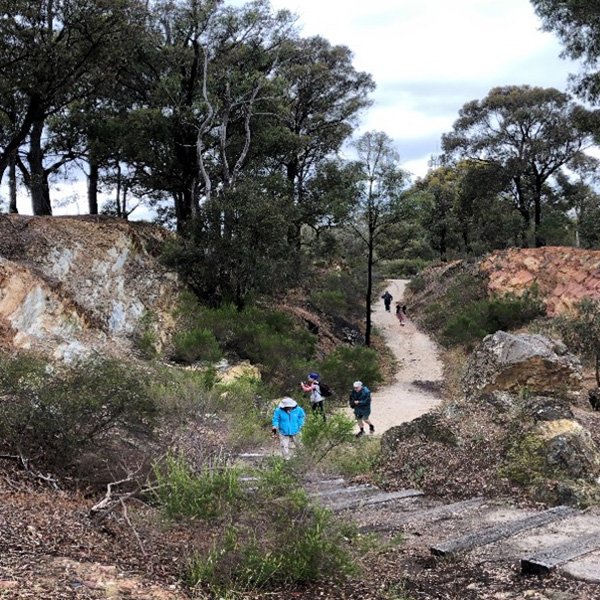
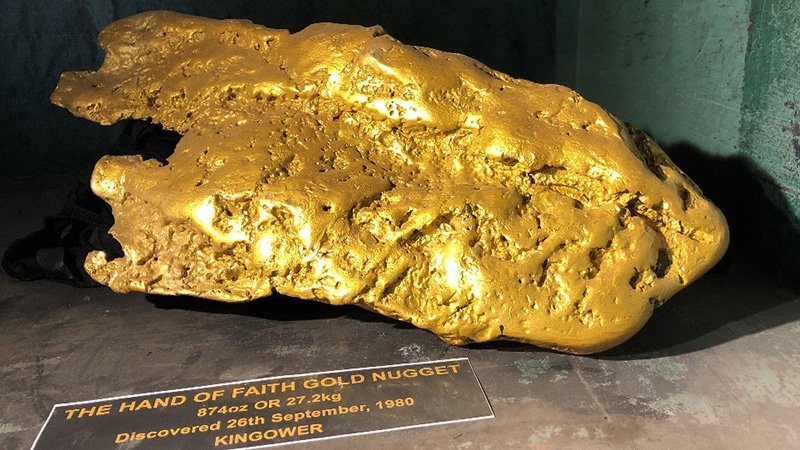
Our second day saw us go further afield to Rheola which was the centre of a major gold rush in the mid-19th Century. With care we viewed some deep mine shafts, but from the surface only! After travelling to an isolated place near Moliagul, we came to the site where the world’s largest nugget was found, ‘The Welcome Stranger’. Sadly, we couldn’t find any more similar-sized nuggets!
Central Deborah Mine in Bendigo was a highlight for many of us. This mine is over a kilometre deep, but visitors are only taken down to the second level. Our guides were very informative and we all emerged with a better understanding of the difficult conditions that the miners worked in.
Our final morning was spent at Central Victoria Hill Diggings in Bendigo which was an open cut mine.
Many thanks to Peter Jackson for sharing his great wealth of knowledge so passionately with others.
<- Previous
Next ->