

Medical research entrepreneur Andrew Wilks spoke at our March Forum
By Brian Ruck
Seven million years of pharmaceutical discovery
Medical research entrepreneur, Andrew Wilks, a ‘hands on’ research scientist, was the March Forum guest speaker and his entertaining presentation included the development of molecular structures in the treatment of cancer and how the progress of mankind has influenced the sophisticated medications that are available today.
Momelotinib works like a key
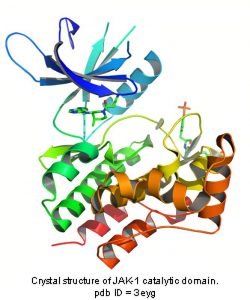
The kinase family are enzymes (catalysts) that catalyse the transfer of phosphate groups from high-energy, phosphate-donating molecules to specific substrates. The particular member of the family that Professor Wilks studies are those associated with various forms of cancers, such as myelofibrosis.
The image shows the crystal structure of JAK-1 catalytic domain.
In the image, the green structure is a typical kinase (they are all different shapes), and the chemical structure on the left is an example of the type of compound that Professor Wilks has developed, in this case, Momelotinib. The drug works by slotting itself neatly into the space in the middle of the kinase, like a key into a lock, thereby stopping it working.
The evolution of mankind and medicine
Primate ancestors
The time-line began with a nice photograph of an ape treating its ailment by eating berries which had no nutritional value, but which have been shown to contain some natural therapeutic compounds now known to us; and a chimpanzee enjoying a ‘tipple’ of naturally fermented fruit juice. Both photographs were taken in the wild, indicating the existence of a sense of the difference between wellness and un-wellness in non-human animals.
Neanderthal man
The next example in the evolutionary chain of progress toward the development of treatments for ailments, can be found in the dental plaque on the teeth of fossilised Neanderthal skulls. Modern analytical techniques have made the detection and identification of natural medicinal chemicals in such samples a fairly reliable indicator of what our ancestors were up to as far as their well-being was concerned.
Witchcraft
We then moved to more ‘modern’, but still very rudimentary treatments in ancient communities of our species, Homo sapiens. The medications dispensed by shamans or witch-doctors were developed by trial and error, with presumable some pretty negative results along the way. This resulted into a substantial body of knowledge as a rudimentary pharmacopeia.
19th century discoveries
More rapid progress was made at the start of the 19th century with the discovery, and more importantly, the isolation of methyl salicylate in plants such as wintergreen. The therapeutic value of the plant in pain management had been well known for generations, but the actual chemical having those properties had remained a mystery.
At about the same time, 1828, the synthesis of urea by the German chemist Friedrich Wöhler from ammonium cyanate was the first generally accepted laboratory synthesis of a naturally occurring organic compound from inorganic materials. This discovery opened the door to unlimited possibilities, and in 1899, scientists in Germany managed to synthesise acetyl salicylic acid, (a derivative of the methyl salicylate found in wintergreen) which was patented and sold with the brand name Aspirin.
Progress opens the floodgates
From that time, scientists have gone on to refine and synthesise huge numbers of therapeutic agents, mostly by synthesising derivatives of naturally occurring chemicals such as penicillins and other antibiotics.
Medicinal chemistry has now evolved to a stage where the scientists, such as Andrew Wilks, can actually design the drug they believe will work from a more detailed knowledge of the target they are seeking to hit. In Andrew’s case, the target is a kinase enzyme, and the drug Momelotinib was specifically designed to hit it.
Andrew then went on to explain how computerised chess, refined through ‘Artificial Intelligence’ and more recent advances in super-computer technology can now allow for even more specific chemical ‘bullets’ to be designed to hit the target, hopefully with less collateral damage or side effects.
It was an excellent and interesting summary of the history of medicinal chemistry from ‘Simians to Cyborgs’ delivered in a very understandable and enjoyable presentation.