
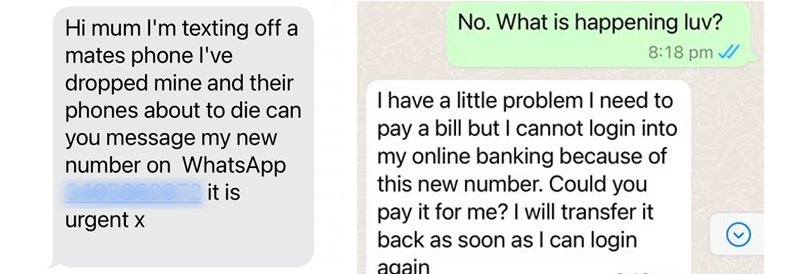
But is it really them?
A scam that has really taken off in recent months is the “Hi Mum” scam. It’s particularly effective with women over 55 – the group most likely to respond to a cry for help from children.
You may think this scam targets those who were affected by the Optus or Medibank breach, but the evidence indicates the scammers are targeting more widely than this. Scam messages are being sent randomly across a wide range of phone numbers.
This is a scam that works so well because it preys on our emotions. Who wouldn’t help their child in an emergency? In 2022, the ACCC had reports from over 11,000 Australians with at least $7.2 million lost.
While Telstra and other telcos are working to stop spam, it is impossible to catch all scams before they reach your phone, so you need to learn to keep yourself safe.
How do you protect yourself?
The ACCC recommends:
Stop and think before you act!
Always verify any contact made out of the blue:
- Check whether your child’s number is actually working .
- If not, find another means to get in touch with them, like contacting someone they’re with, or via email or social media.
- If you still can’t contact them, consider asking a personal question a scammer couldn’t know the answer to, so you know the person you are speaking to is who they say they are.
- Never send money without being absolutely sure who you are sending it to.
- If you do get caught, act quickly – phone your bank or financial institution and report the issue.
Sources: ABC news report (https://www.abc.net.au/news/2022-12-12/inside-the-hi-mum-text-scam-how-it-works-whos-behind-it/101726762) and Scamwatch articles.