

… to be wary!
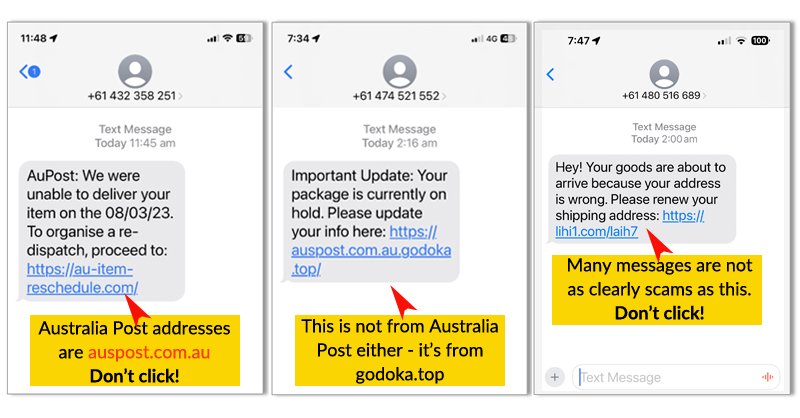
Christmas shopping, Black Friday and Amazon Prime days – at this time of year there are lots of reasons to expect a parcel. The scammers know this, and send more scam emails and texts. You haven’t been hacked, nor has Australia Post – it’s just the scammers relying on coincidence.
How to check if it’s a scam
- Is this really just for you? Scammers don’t usually include your name or details about the parcel. Are you just one of many recipients?
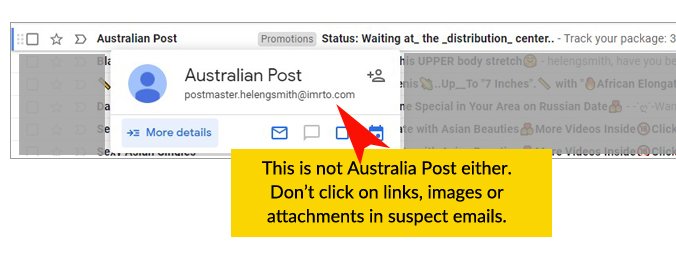
- Who are you dealing with? Check the From address in emails. Be wary of “spoofed” sender names in messages. Is this really from who it says?
- Does the message push you to act quickly? Urgency is a key scammer tool.
Stop – think – check!
- Think before acting – could this message be a scam?
- Avoid opening scam emails if you can – get a good spam filter (Gmail is good for this or choose one from this list).
- NEVER click a link in a text message or suspicious email.
- Don’t unsubscribe from emails unless you subscribed in the first place – otherwise you get on the scammer’s target list.
- NEVER open attachments in suspicious emails – they often download viruses.
- Keep your devices up-to-date. Set them to automatically update software. If your device can no longer update it may be time to replace it.
If in doubt, contact the organisation using details you find for yourself.
If you have fallen for a scam
- Act quickly if something feels wrong.
- Contact your bank if you notice some unusual activity or if a scammer gets your money or information.
- Seek help from IDCARE if your personal information has been stolen.
- Report to ReportCyber and Scamwatch.
Missed the session on scams?
National Australia Bank have a recorded webinar (approx 45 minutes) that covers much the same information.