
Are you planning to buy your Christmas presents online this year?
While online shopping provides you the opportunity to stock up on gifts from the comfort of your own home, scammers see this as an opportunity to take advantage of unsuspecting victims. Even if you don’t shop online, you may find yourself the target of these scams.
Parcel delivery scams
This is the time of year when we may be expecting more parcels, so “missed delivery” scams are common, and even more so this year. Scamwatch received over 16,000 reports of these scams in just 2 months from August this year.
If you’re waiting for a parcel, remember that scammers take advantage of people expecting deliveries.
Australia Post and other parcel delivery companies will never email, call or text you asking for personal or financial information or a payment. Many delivery companies have apps where you can track your parcels, so use those rather than clicking on links in messages or emails.
These scam SMS messages can include:
- scheduling a delivery time
- tracking a delivery
- managing a delivery that is ‘in transit’ or will be ‘delivered soon’
- telling you it’s your last chance to arrange pick up/delivery of a parcel
- asking you to enter your details to receive a package
- getting ‘more information’ about your delivery.
This scam is particularly targeting phones and can trick you into installing malware on your Android phone.
More information on how to protect yourself
https://www.scamwatch.gov.au/news-alerts/missed-delivery-call-or-voicemail-flubot-scams
Nasty bank scam
A banking scam has recently been noticed by some of our members.
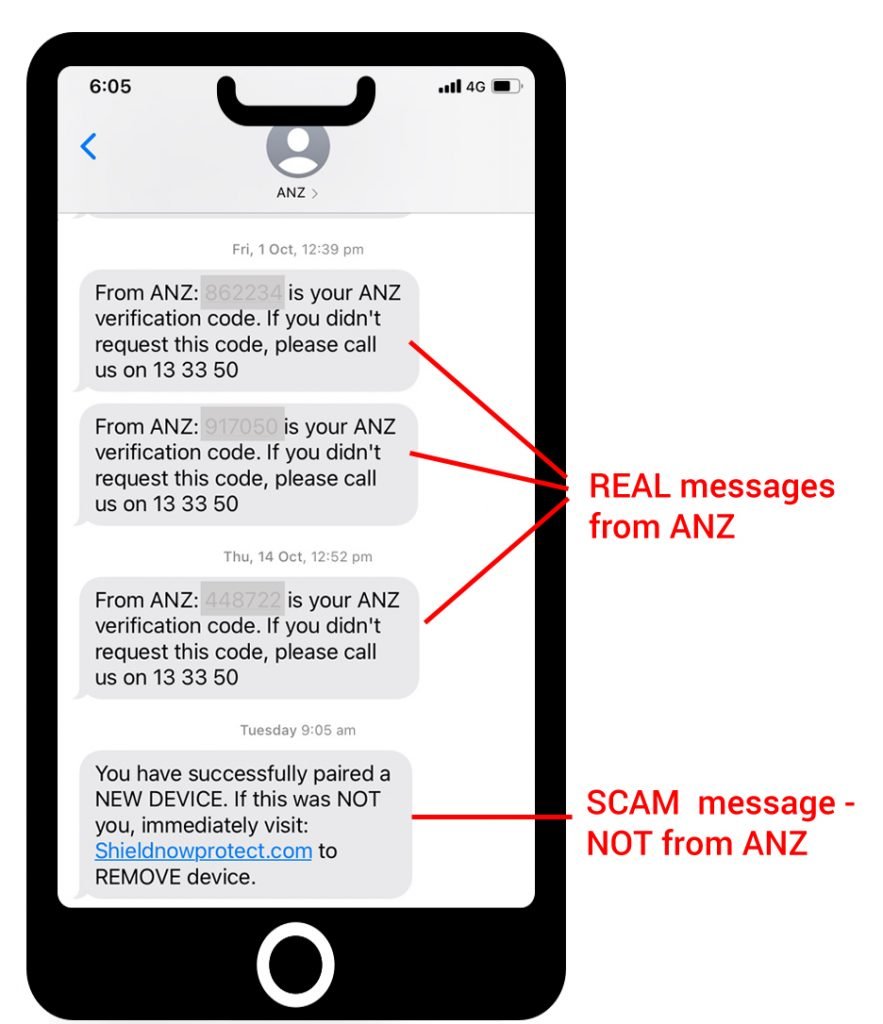
People are being sent text messages which appear to be from ANZ Bank, claiming that a new paired device has been added to their account. The text messages appear on the same list as legitimate messages from the bank as shown in the screengrab illustration.
The text message reads
“You have successfully paired a NEW DEVICE. If this was NOT you, immediately visit Shieldhowprotect.com to REMOVE device.”
If you click on the link you are re-directed to an official looking site and asked to enter personal or banking details. Do not fill in this information or scammers may be able to access your funds.
Scam text messages such as these are known as “smishing” – and they’re used by cybercriminals to get access to your account.
What to do
Your bank will never send you a text or an email with a link to your account.
If you have received a suspicious email or text claiming to be from your bank:
- Do NOT click on any unexpected/unusual links or open attachments.
- Forward the email or SMS to your bank
- Immediately contact your bank if you’ve clicked on any links or downloaded any attachments and make sure you use a phone number or login from your account statement not the message
- Delete the message from your inbox.
Contact your bank immediately if you’ve:
- shared your banking details in response to a hoax phone call, email or SMS
- accidentally clicked on any links or downloaded any attachments
- noticed any unusual transactions on your accounts.
Also report the scam to:
- Scamwatch so they can alert others
- IDCare if you think you have shared personal information that puts your identity at risk.
Learn how to protect yourself
Learn how to avoid scams and tricks at BeConnected, the Government’s online education resource for seniors.